Crianza or Reserva? Differences and wine ageing classifications
You are standing in front of a shelf full of bottles when the question arises: Crianza or Reserva? At first glance, the difference seems to come down to a single word on the label. Behind that word, however, lie months or even years of development in barrel and bottle.
Ageing gradually transforms a wine: the fruit begins to mingle with new aromas, the tannins soften and the oak becomes integrated, creating an increasingly complex whole. This does not mean that a wine necessarily improves the longer it ages.
A Crianza may be exactly what you are looking for with an informal meal, while a Reserva may be better suited to a special occasion. It all depends on the style of the wine, how it was made and, of course, your own preferences.
In this article, we explain the meaning of classifications such as Joven, Crianza, Reserva and Gran Reserva. We look at how long each type of wine spends in barrel and bottle, and the differences you may notice when tasting them.
How wines are classified by ageing
When we describe wines as Joven, Crianza, Reserva or Gran Reserva, we are classifying them according to the time they have spent developing at the winery, whether in barrel, in bottle or in both.
There is, however, an important point to bear in mind: Crianza, Reserva and Gran Reserva are three regulated terms for red wines with a Protected Designation of Origin. Under Regulation (EU) No 1308/2013 of the European Parliament and of the Council, which establishes the minimum requirements for PDO wines, each designation may set its own, more stringent conditions.
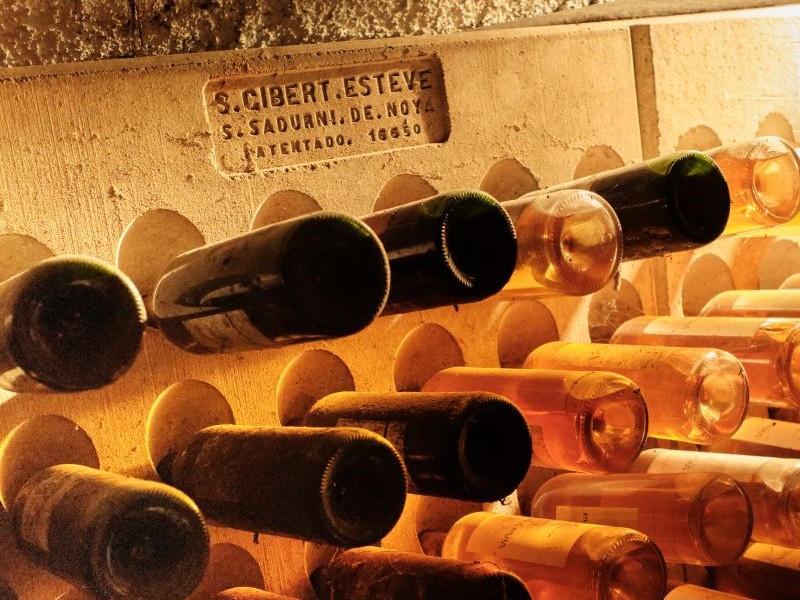
The ageing periods are therefore not always the same in every region. Let us look at what each classification means and the requirements applied in PDO Cariñena.
Crianza
A Crianza wine has undergone a period of maturation in barrel, or in both barrel and bottle.
As a general guide, Crianza reds usually undergo a minimum total ageing period of around two years, spending part of that time in oak.
In PDO Cariñena, Crianza reds must be aged for at least 24 months, including a minimum of six months in oak barrels with a maximum capacity of 330 litres.
What do those six months in oak bring to the wine? Quite a lot.
- Oxygen passes through the wood into the barrel very slowly and in a controlled manner, a process known as micro-oxygenation. This helps to soften some of the tannins and encourages the different components of the wine to integrate.
- At the same time, oak can add spicy, toasted, balsamic or vanilla nuances. Their intensity depends on several factors, including the origin of the wood, the age and size of the barrel, and the length of time the wine remains in it.
The result is usually a wine in which fresh fruit remains clearly recognisable, now accompanied by new aromas. This is why Crianza wines tend to be versatile, balanced and easy to enjoy.
Reserva
A Reserva needs more time to develop. For red wines, the usual minimum ageing period is three years, including at least one year in barrel and the remainder in bottle. These requirements also apply in PDO Cariñena.
During this period, the fruit takes on a riper character and the aromas evolve. The oak is usually more integrated and the wine develops a more polished texture.
Producing a good Reserva starts with high-quality grapes and a wine with the potential to age. Not every vintage or wine is intended to develop for so many years at the winery. Identifying the plots, varieties and individual lots with that capacity is part of the winemaker’s craft.
Gran Reserva
A Gran Reserva undergoes the longest ageing period of the three classifications. In general, this means a minimum total of five years in barrel and bottle. In PDO Cariñena, a Gran Reserva red must be aged for at least 60 months, including a minimum of 18 months in oak barrels, with the remainder spent in bottle.
After this time, fresh fruit often gives way to riper or stewed-fruit notes, alongside aromas of leather, tobacco, cocoa, spices or nuts, depending on the grape variety and the winemaking process.
Time in bottle plays an essential role. The wine continues to develop in an almost oxygen-free environment, allowing its aromas to integrate, its structure to become more refined and the whole to gain depth.
Even so, a Gran Reserva need not be intense or heavy. When it is well balanced, this style of wine can be particularly delicate and elegant.
Other less common classifications
In addition to the three above, there are other classifications linked to winemaking or ageing. For example:
- Joven. This term describes a wine usually enjoyed soon after the harvest and noted for its fruit, freshness and varietal expression.
- Roble. This indicates that the wine has spent time in wooden vessels, although it may not meet the ageing requirements for Crianza. The minimum period is 30 days for white and rosé wines and 60 days for red wines.
- Noble. In PDO Cariñena, this requires at least 18 months of ageing in oak vessels with a maximum capacity of 600 litres, or in bottle.
- Añejo. In PDO Cariñena, this requires at least 24 months of ageing in oak vessels with a maximum capacity of 600 litres, or in bottle.
- Viejo. This applies to wines that have developed the characteristics of prolonged maturation through at least 36 months of ageing.
The main differences between Crianza, Reserva and Gran Reserva
Although the most obvious difference between Crianza, Reserva and Gran Reserva is the time they spend ageing, it is not the only one.
The way a wine develops also influences its aromas, flavour and texture, and even the occasion on which we might choose to open each bottle.
Let us take a closer look at the differences:
Ageing period
As we have seen, a Crianza red usually develops for around two years in barrel and bottle. For a Reserva, this increases to three years, while a Gran Reserva normally reaches five.
These figures are a general guide. The specific requirements may vary according to the rules set by each Designation of Origin. Remember: a longer ageing period does not necessarily mean higher quality.
For a wine to develop over many years, it also needs good structure, sufficient acidity, concentration and balance from the outset. Some wines reveal their full potential when young, while others need time to develop new nuances.
Time in barrel and bottle
Although we often refer to the total ageing period, time in barrel is not the same as time in bottle. Each serves a different purpose:
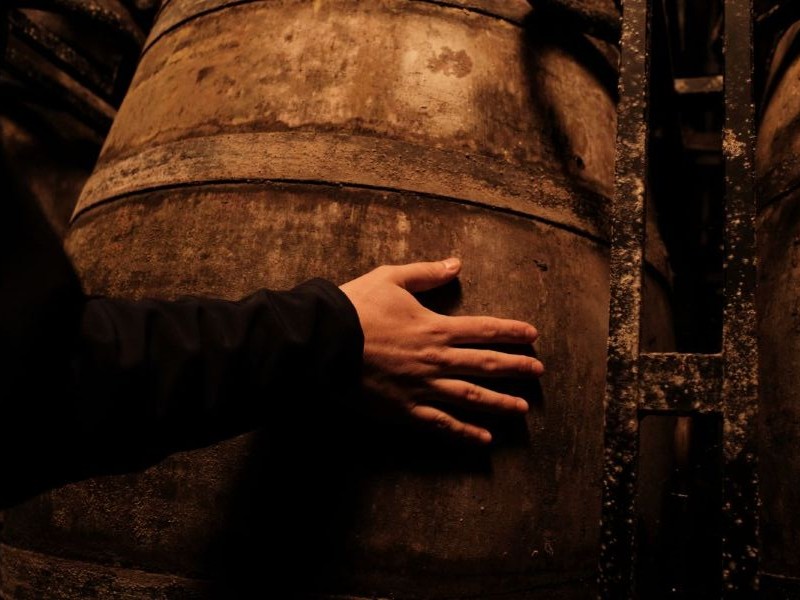
- In the barrel, the wine comes into contact with the wood and receives small amounts of oxygen. This softens the tannins and contributes aromas of vanilla, spices, cocoa or toast. The barrel should never mask the wine’s personality: its role is to support it, add complexity and help its components to integrate.
- Once the wine is bottled, its development continues much more slowly and with minimal exposure to oxygen. During this period, the aromas come together, the texture becomes more refined and the wine may develop new nuances.
This is why two wines aged for the same number of months can be very different. What matters is not only how long they have matured, but also how that time has been divided between barrel and bottle.
Differences in aroma, flavour and structure
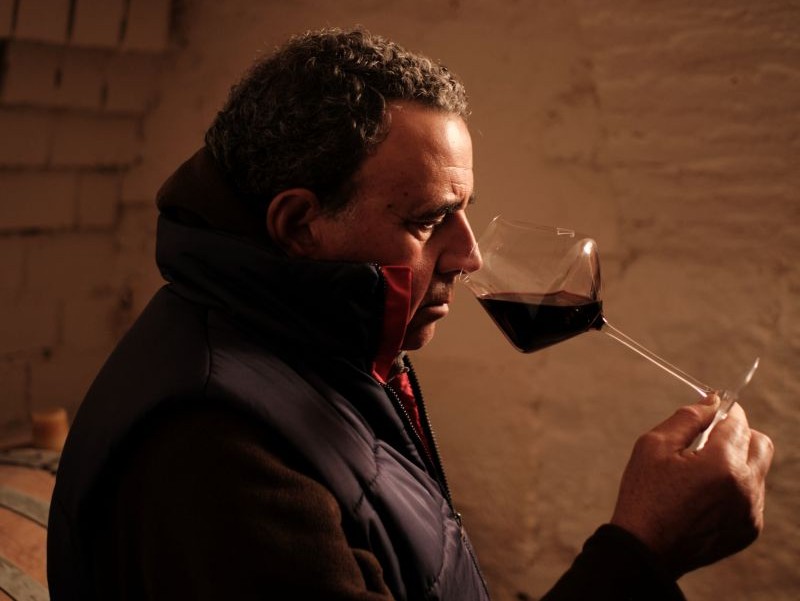
A wine’s aromas change and develop over time:
- In a young wine, aromas associated with the grape itself tend to stand out, including fresh fruit, flowers and certain herbaceous notes.
- In a Crianza, the fruit remains present but begins to mingle with aromas contributed by the oak, such as vanilla, spices, cocoa and toast.
- In a Reserva, the aromas are more integrated. The fruit takes on a riper character, accompanied by balsamic, spicy or earthy nuances.
- In a Gran Reserva, extended development brings notes of leather, tobacco, nuts or stewed fruit.
Ageing also transforms the way a wine feels on the palate. Over time, the tannins may soften and the wine can become rounder and more polished.
This does not mean that a Reserva will always be softer than a Crianza. The grape variety, acidity, intensity of maceration and the wine’s initial structure also have a significant influence on the result.
The wine’s colour also changes. The violet hues commonly found in young reds gradually develop into garnet, brick-red or orange tones.
Differences in price and drinking occasion
In general, Reserva and Gran Reserva wines tend to cost more than Crianza wines. Throughout the ageing period, the winery must provide storage space, barrels, suitable conditions and continuous monitoring.
When is the ideal time to enjoy each one? A Crianza is highly versatile and well suited to informal meals and a wide range of occasions. A Reserva may appeal when we are looking for greater complexity, while a Gran Reserva invites us to slow down and savour it.
Comparison of Crianza, Reserva and Gran Reserva wines
| Crianza | Reserva | Gran Reserva | |
| Minimum total ageing | 24 months | 36 months | 60 months |
| Minimum time in barre | 6 months | 12 months | 18 months |
| Remaining ageing period | Barrel or bottle | Bottle | Bottle |
| Profile | Fruit-drive, balanced and showing nuances of oak | More developed, complex and integrated | Deep and elegant, with aromas shaped by extended ageing |
| Aromas | Fruit, vanilla, spices and toast | Ripe fruit, cocoa, spices and balsamic notes | Leather, tobacco, forest floor, nuts or stewed fruit |
| Drinking occasion | Informal meals and a wide range of occasions | Formal meals and special occasions | Celebrations, after-dinner drinking or tastings |
| Price | Generally more affordable | Mid-range or premium | Higher |
Frequently asked questions about wine ageing classifications
Do ageing periods differ for red, white and rosé wines?
Yes. The ageing periods for red wines differ from those for white and rosé wines.
In PDO Cariñena, Crianza white wines and rosé wines must be aged for at least 18 months, including a minimum of six months in barrel. Reserva wines require a total of 24 months and Gran Reserva wines 48 months. In general, therefore, they require less ageing than red wines.
Which wine is softer, Crianza or Reserva?
A Reserva can often seem rounder and more polished because its tannins have had more time to develop and the aromas from the oak to integrate. This does not mean it will always be softer.
Many other factors shape our perception of a wine, including the grape variety, acidity, maceration, level of extraction and degree of concentration.
If you are looking for a softer wine, do not rely solely on its classification. The winery’s description and the characteristics of the grape variety can provide many more clues.
How can you tell whether a wine is Crianza or Reserva?
The easiest way to tell whether a wine is Crianza or Reserva is to check the bottle’s front and back labels.
When a wine uses the terms Crianza, Reserva or Gran Reserva, the classification must appear on the label. Wines with a Designation of Origin also usually carry an official mark issued by the relevant Regulatory Council, making them easier to identify.
Must every wine state its classification on the bottle?
No. A wine does not have to be classified as Joven, Crianza, Reserva or Gran Reserva. Some wines have spent time in barrel without using any of these terms.
If a bottle does not state an ageing classification, this does not mean that the wine is of lower quality or has not been aged. In such cases, it is best to consult the information provided by the winery, which will usually give details of the winemaking process and ageing period.
Is Reserva better than Crianza?
Neither classification is inherently better: it depends on your tastes and the occasion. If you prefer fresh, fruit-driven wines, you may enjoy a Crianza more. If you are looking for more developed aromas, a polished texture and greater complexity, a Reserva may be more appealing.
In PDO Cariñena, each classification offers a different way to discover the region. Some wines present the fruit in its most direct form, while others allow barrel and bottle ageing to shape their development.
Now that you know the differences, which will you choose: Crianza or Reserva? Our recommendation is simple: try both and discover which wine best suits each occasion.