Red Wine Colour: What Influences Its Evolution and What Shades Are There?
There are countless aspects to focus on when tasting a wine for the first time: its aroma, flavour, intensity… and, of course, its colour.
When it comes to red wines, the colour spectrum is particularly broad and can reveal a great deal about the grape variety, winemaking process, and stage of development of each wine.
Want to learn more about red wine colour? In this article, we explore the main shades found in red wines and the factors that influence them.
Why Wine Colour Matters in Tasting
Colour is the very first thing we notice when tasting a wine, even before bringing it to the nose or taking a sip. What’s more, its hue, intensity, and brightness can tell us far more than you might think.
By observing a wine’s appearance, we can often gain clues about its age and development, the grape variety used, the level of extraction during winemaking, and even certain aspects of its ageing process.
For example, violet and purple hues are typically associated with young wines, while garnet, brick-red, and orange tones generally indicate a more mature stage of development.
That’s why observing a wine in the glass is the first step towards understanding it. Its colour is its calling card, helping us anticipate some of the aromas and flavours we will later discover on the nose and palate.
Red Wine Colours and Shades
The range of colours found in red wine is remarkably diverse, and for good reason. Each shade is influenced by factors such as grape variety, maceration time, wine age, ageing methods, and bottle evolution.
Let’s take a closer look at the main colours found in red wines and what they typically indicate.
Violet and Purple Hues
Violet and purple tones are characteristic of young red wines. These vibrant, intense colours immediately convey freshness and vitality.
In the glass, such shades are often associated with wines that display pronounced fruit character, particularly fresh red and black fruit aromas. They can also suggest that the wine has retained much of its youthful energy and remains in the early stages of its development.
Red, Ruby and Garnet Colours
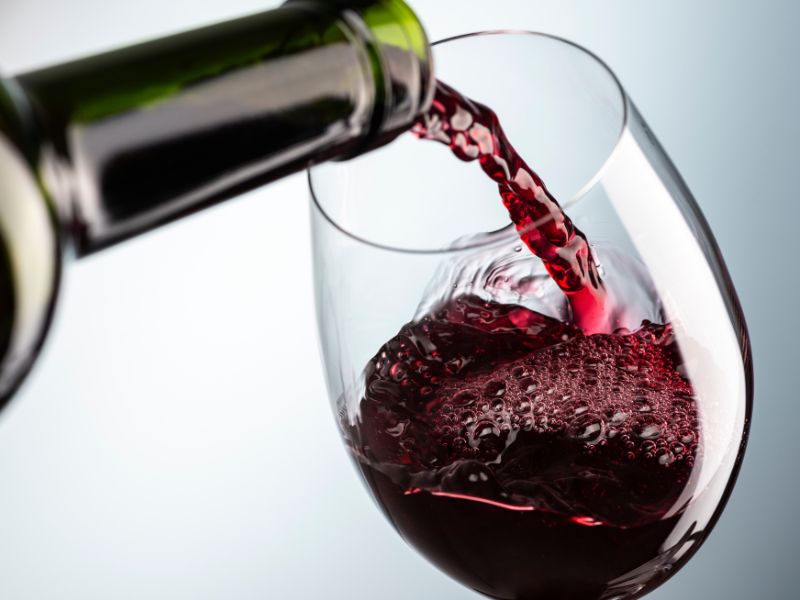
Red, ruby and garnet shades are common in red wines that have had some time to evolve. Ruby typically reflects balance, vibrancy and a degree of maturity, while garnet tones tend to indicate a more advanced stage of development.
Compared with violet hues, these colours are less vivid but often appear more refined and stable. They are frequently found in wines that have gained complexity over time while still retaining their fresh, fruit-driven character.
Brick and Orange Tones
Brick-red, coppery and orange tones generally appear in more mature red wines. They are particularly noticeable around the rim of the glass, where the colour becomes lighter and warmer reflections emerge.
These shades are perfectly normal in aged wines and do not necessarily indicate a fault. However, if the wine appears dull or lacks brightness, it is worth assessing it as a whole by paying attention to its aromas and flavours as well.
The Main Factors That Influence Wine Colour
Behind every shade of red wine lies a combination of factors linked to the grape, the winemaking process, and the passage of time. Some influence colour from the very beginning during vinification, while others gradually alter it as the wine evolves.
Among the most important are:
Grape Variety
The grape variety used plays a key role in determining the colour of a red wine.
Not all grape varieties contain the same concentration of pigments in their skins. As a result, some produce wines with deeper, darker colours, while others create lighter, more translucent shades.
For example, Garnacha (Grenache) often contributes bright, vibrant red tones, whereas varieties such as Cariñena (Carignan), Syrah, and Cabernet Sauvignon can produce wines with greater colour intensity and depth. Of course, the final result will also depend on factors such as winemaking techniques, ageing, and the wine’s overall maturity. Nevertheless, the grape variety establishes a significant part of the wine’s final appearance.
Fermentation and Temperature
During fermentation, the grape juice remains in contact with the skins, where many of the compounds responsible for colour are found. The longer this contact lasts, the more pigments can be extracted into the wine.
Temperature also plays an important role. Higher fermentation temperatures can encourage greater colour extraction, although they must be carefully managed to avoid negatively affecting wine quality. At this stage, the winemaker’s expertise is essential in achieving the desired balance between colour, aroma, flavour and structure.
Oak Ageing
Ageing in oak barrels can also influence the evolution of a wine’s colour. During this process, the wine is exposed to small amounts of oxygen through the wood, gradually altering its appearance over time.
In oak-aged red wines, violet tones tend to soften and evolve into ruby, garnet or even brick-red hues. Barrel ageing can also help stabilise colour and contribute to a more complex and mature appearance.
Wine Age
Age is another fundamental factor in understanding red wine colour.
Young wines typically display brighter, more vibrant shades with pronounced violet tones, whereas older wines tend to develop garnet, brick-red or orange hues.
This transformation is a natural part of the wine’s evolution. Over time, pigments change and colour intensity gradually diminishes.
For this reason, examining the rim of the glass can provide useful clues about a wine’s age: the more orange the reflections, the more developed the wine is likely to be.
What Wine Colour Can Tell Us
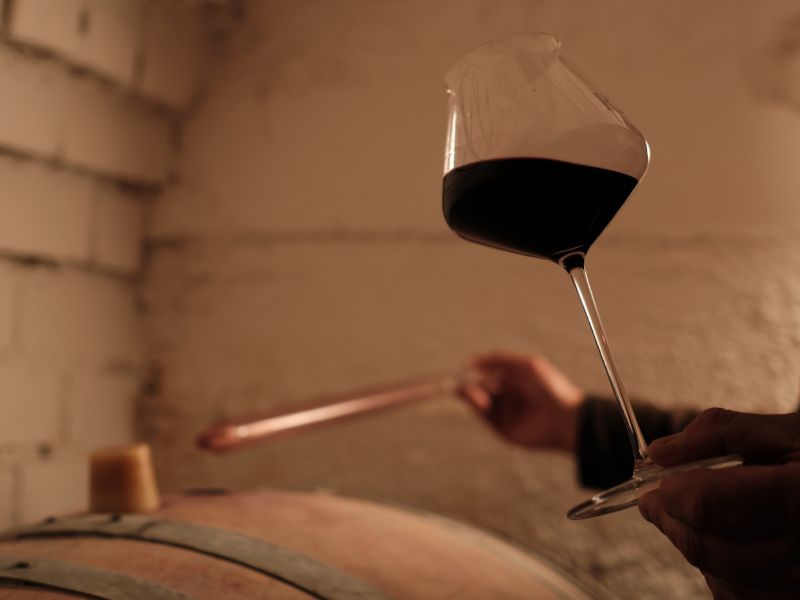
As we have seen, the colour of a red wine can reveal a great deal before we even taste it. While it should never be interpreted in isolation, its hue, intensity and brightness can help us form a first impression of the wine in front of us.
- The hue may indicate whether the wine is young, oak-aged, or more fully evolved.
- The intensity can reflect the grape variety, extraction level, or overall concentration of the wine.
- Brightness and clarity also influence first impressions: a bright wine often appears more appealing, while a dull or cloudy wine may warrant closer examination.
Ultimately, the colour of a red wine does not provide definitive answers, but it offers valuable clues during tasting. It is the first signal that gains meaning when combined with aroma, flavour and the overall experience on the palate.
Tips for Observing Wine Colour Correctly
You do not need to be an expert to assess the colour of a red wine properly. Simply pay attention to a few details:
- Choose good lighting, preferably natural daylight. Artificial or overly warm lighting can distort colour perception.
- Always use a clean, transparent glass that allows you to observe the wine clearly.
- View the wine against a white background, such as a napkin or tablecloth, to better distinguish its hue and intensity.
- Tilt the glass slightly and observe the wine from different angles. The centre will reveal the depth of colour, while the rim often shows nuances linked to the wine’s development.
Observing a wine’s colour is ultimately another way of understanding its character. In the wines of the Cariñena Designation of Origin, that first glance can reveal the diversity of a region where Garnacha and Cariñena grapes play a central role, producing wines with vibrancy, depth and a strong sense of place.
We invite you to discover this D.O. through wine tourism experiences and winery visits, and to explore the history, character and remarkable diversity of its wines.
Frequently Asked Questions About Red Wine Colour
What Is the Difference Between Colour, Depth and Intensity in Red Wine?
Although these terms are sometimes used interchangeably, they refer to different aspects of a wine’s appearance:
- Colour refers to the wine’s hue, whether violet, ruby, garnet, brick-red or orange.
- Depth (or colour density) refers to how opaque the wine is. A deeply coloured wine allows very little light to pass through, while a lighter-coloured wine appears more transparent.
- Intensity refers to the visual strength or concentration of the colour itself.
Is There a Relationship Between Red Wine Colour and Quality?
Colour can provide useful clues, but it does not determine a wine’s quality on its own. A darker wine is not necessarily better than a lighter one, just as a more evolved colour does not automatically indicate that a wine is past its best.
Quality depends on the balance of many factors, including aroma, flavour, structure, freshness, winemaking and storage conditions. Colour should therefore always be assessed as part of the overall tasting experience.
Does Red Wine Change Colour as It Ages?
Yes, the colour of red wine evolves over time.
This is why young wines often display vibrant violet or bright red hues, while older wines tend to develop garnet, brick-red and orange tones.
This change is entirely natural and forms part of the wine’s ageing process. As the wine matures, colour intensity may gradually diminish and the reflections around the rim of the glass typically become warmer.