Wine label guide: rules, information and sizes
You have probably picked up a bottle at some point and, before uncorking it, tried to work out what lies inside. Where does it come from? Which grapes were used? What is the vintage? How much alcohol does it contain?
Many of those answers can be found on the label. Wine labels are not there simply to dress up the bottle: they act as its calling card and contain information that helps us understand its origin, composition and characteristics.
Would you like to learn how to read them? Let’s decode them!
What information does a wine bottle label contain?
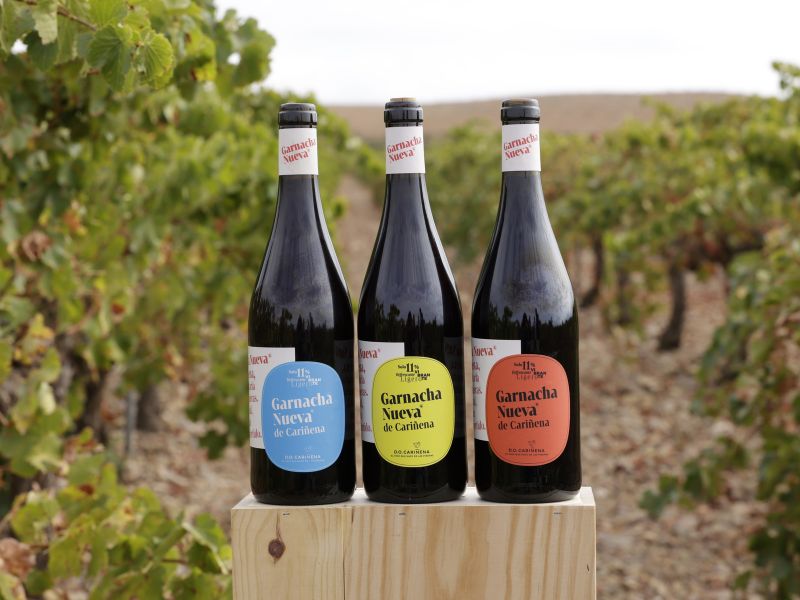
Although two bottles may have completely different labels, there are certain details that you will commonly find on most of them. Some are required by law, while others depend on the wine or on the information the producer chooses to highlight.
Designation of origin
When a wine has Protected Designation of Origin status, the label enables us to identify where it comes from and the designation under which it is protected.
This is more than a simple geographical detail. A PDO means that the wine is linked to a specific territory and subject to established production requirements.
In our case, seeing PDO Cariñena on a bottle brings you closer to a territory shaped by stone, the cierzo wind and a winemaking tradition stretching back more than two thousand years.
Vintage
The vintage indicates the year in which the grapes used to make the wine were harvested. This is particularly useful information because each harvest is influenced by factors such as temperature and rainfall.
Understanding different vintages therefore helps us appreciate how a wine has evolved and the characteristics of that particular harvest.
However, stating the vintage on a wine label is not compulsory. When this indication is used, EU rules stipulate, with a few exceptions, that at least 85% of the grapes must come from the year shown.
Alcohol content
The 13%, 13.5% or 14% vol. shown on a bottle indicates its actual alcoholic strength by volume. Unlike the vintage, this is one of the mandatory particulars on a wine label.
Grape variety used
Garnacha, Cariñena, Macabeo, Syrah… The label may also tell us which grape variety was used to make the wine.
A word of caution: if the grape variety is not shown, it does not mean the wine has anything to hide. This information is optional and, moreover, many wines are made by blending different varieties.
Ingredients and nutrition information
This is a relatively recent addition to wine labelling. Although the EU reform introducing this requirement was approved in 2021, the new rules began to apply on 8 December 2023.
Since then, wines have been required to provide a list of ingredients and a nutrition declaration on the label. Some of this information is often provided via a QR code.
And what about wines produced before that date? They may continue to be sold with the previous labelling until stocks run out.
Other useful information about the wine
There are other clues worth looking for. These include the provenance of the wine, who bottled it and the nominal volume contained in the bottle.
Allergens, such as sulphites where their declaration is required, must also be identified.
How much of this information is required by law?
However, not all of these details necessarily have to appear on a wine label. Wine labelling rules distinguish between mandatory and optional particulars:
- The mandatory particulars include the wine category, provenance, alcoholic strength, nominal volume, nutrition information and list of ingredients. Wines with PDO or PGI status must also display the corresponding terms. Particular requirements apply to certain wines, including sparkling and dealcoholised wines.
- The vintage and grape variety, meanwhile, are generally optional particulars and are subject to their own conditions of use.
Wine label sizes under the regulations
Is there an exact size that every label must be? No. EU rules do not establish a standard size for wine labels. What matters is that the mandatory information is visible, legible and indelible, and clearly distinguishable from the rest of the design.
Many of the mandatory particulars must appear within the same field of vision so they can be read without turning the bottle, and the characters must be at least 1.2 mm high.
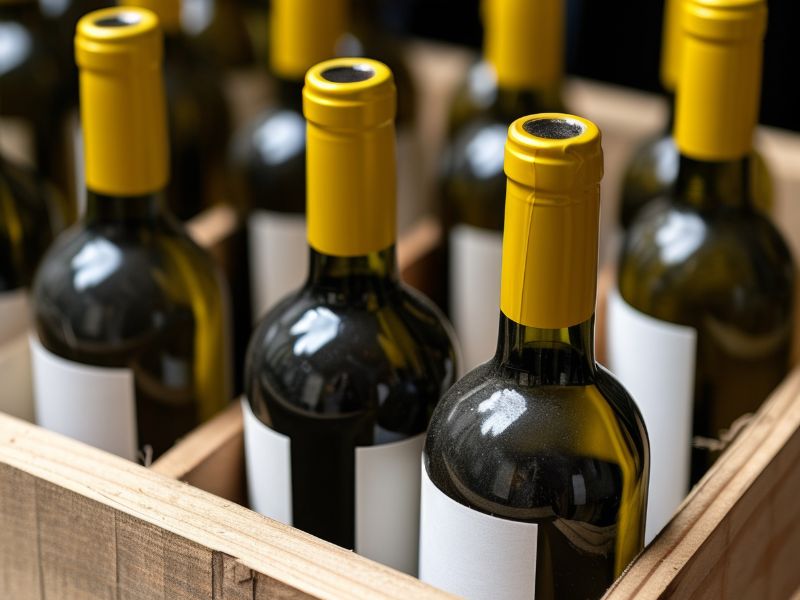
A winery therefore has considerable creative freedom when deciding on the format of its label, provided the legibility of the required information is not compromised.
Using a QR code to provide further information
It is increasingly common to find a QR code on wine labels. Its purpose is to provide further information without crowding the bottle with text and data that are difficult to read.
Scanning it gives you quick access to additional information about the wine, while allowing the label to retain a cleaner, more visual design.
A QR code cannot, of course, replace all the mandatory information that must physically appear on the packaging.
The wine label as a marketing tool and the importance of design
So far, we have focused on the rules. But a label has another purpose too: to give a bottle personality before it has even been opened. Typography, illustrations, colours, paper, embossing and finishes all help to build a winery’s visual identity.
For example, a classic label conveys tradition; a minimalist one suggests a contemporary style; and a landscape illustration tells us something about where the wine comes from.
Good design does not make the wine inside any better, but it does achieve something very important: it tells its story more effectively and makes us want to discover it.
That story can then continue beyond the bottle. For example, by visiting the vineyards and wineries through wine tourism, and experiencing first-hand everything that the label has only begun to reveal.
Symbols that may appear on wine labels
As well as words and numbers, wine labels may feature a wide variety of symbols, including:
Recycling and packaging sustainability symbols
These tell us about the materials used to make the bottle or help consumers sort and recycle it correctly.
Their meaning will depend on the specific symbol shown on the packaging.
Sustainability certification symbols
Some wines display marks associated with organic production or other environmental certification schemes.
In these cases, it is important to check which organisation or certification scheme supports the mark, as not every nature-related symbol represents an official certification.
Vegan wine symbols
You may also find marks identifying wines made without using animal-derived products in processes such as fining.
Again, the design of the symbol will depend on the certification scheme or organisation that supports it.
Butterfly symbols
Have you spotted a butterfly on a wine label? Be careful not to assume that it automatically has a particular meaning.
There is no universal butterfly symbol that, by itself, identifies a wine as organic, sustainable or vegan in the European Union.
Some wineries use butterflies as part of their visual identity or to convey ideas associated with nature and biodiversity.
The symbol should therefore always be interpreted alongside the name of the certification scheme or the information accompanying it, rather than by its shape alone.
The difference between the main bottle label and other elements
There is one final point to consider. When we talk about a label, we usually picture the front of the bottle, but a bottle may feature several different elements:
- The front label generally carries the main visual identity: the name of the wine, the winery, the designation, and the vintage or grape variety when these are highlighted.
- The back label contains the legal and technical information, bottler details, allergens, a QR code and sometimes a short description of the wine.
- Then there is the neck tag, the piece placed around the neck of the bottle that may be used to communicate awards, campaigns or additional information.
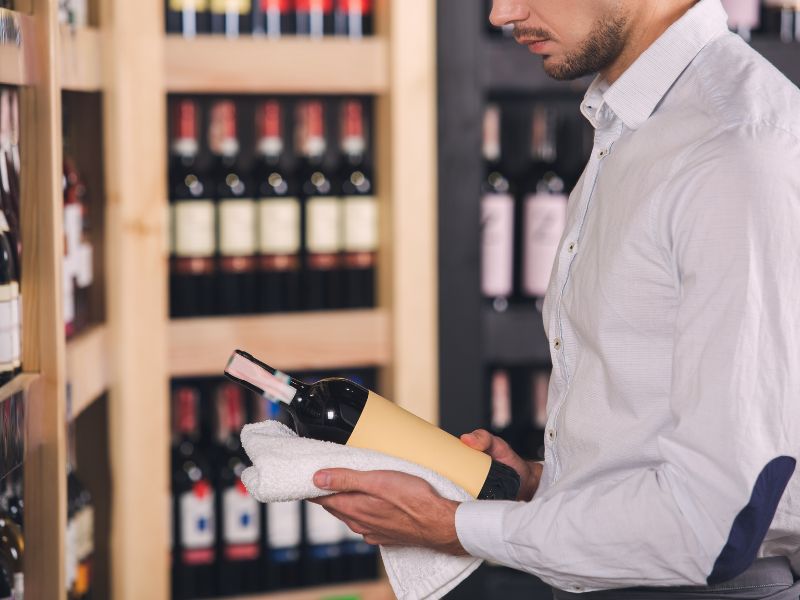
As you can see, reading a wine label allows you to discover a bottle before tasting it. The next time you have one in your hands, turn it around, look for its symbols and take in every detail. That small piece of paper may tell you far more about the wine than you imagined.
And if you are choosing a bottle, why not start with a good wine from a Protected Designation of Origin such as Cariñena? Put what you have learnt into practice and let it surprise you!